Most founders think fundraising starts when they make a pitch deck.
It doesn't.
Fundraising starts months before that — when you're figuring out whether anyone actually wants what you're building.
And here's the uncomfortable truth:
If investors aren't interested, sending 500 more cold emails probably won't fix it.
The problem is usually somewhere else.
Maybe you're raising too early.
Maybe you're talking to the wrong investors.
Maybe your traction isn't strong enough.
Or maybe you simply haven't made your startup easy to understand.
So if you're a founder trying to raise startup funding in India, here's how I'd think about it.
First: Don't Raise Money Just Because You Can
This sounds obvious. It's not.
A lot of founders decide:
"We're raising ₹2 crore."
Then they work backwards to justify the number.
Do the opposite.
Ask:
What do we need to achieve in the next 18–24 months?
Maybe it's:
₹5 crore ARR
100,000 users
20 enterprise customers
Product-market fit
Launching in three cities
Building the first version of the product
Then calculate what it costs to get there.
That's your fundraising number.
Raise for milestones, not vibes.
The Investor Doesn't Care That Your Idea Is Amazing
You probably think your startup is amazing.
That's good.
You should.
But an investor has probably heard 20 versions of your pitch this week.
"AI-powered."
"Disrupting a $10 billion market."
"Uber for X."
"Revolutionizing Y."
None of these phrases mean much by themselves.
What matters is evidence.
If you say:
"The market is huge."
Show the market.
If you say:
"People love our product."
Show retention.
If you say:
"We're growing fast."
Show the numbers.
The strongest pitch isn't the one with the best adjectives.
It's the one with the best evidence.
So, What Actually Makes a Startup Fundable?
There isn't a magic checklist.
But great startups usually have some combination of these:
1. A painful problem
If the problem isn't painful, customers won't care.
2. A large market
You don't necessarily need a huge market today.
But investors need to believe it can become huge.
3. Something people actually want
Users don't care about your pitch deck.
They care about your product.
4. Traction
Revenue is great.
But depending on the business, users, growth, retention, partnerships or other forms of traction can also matter.
5. A strong founding team
At the early stage, investors are betting heavily on the founders.
6. A reason you can win
If five companies can build exactly what you're building, why you?
That's the question you need to answer.
Where Should You Get Funding?
VC isn't the answer to everything.
Depending on your stage, you could raise from:
Pre-seed:
Bootstrapping, friends & family, angels, incubators, grants and accelerators.
Seed:
Angels, seed funds, accelerators, government programs and early-stage VCs.
Series A+:
VCs, strategic investors and potentially venture debt.
And there's another option founders often underestimate:
Government funding.
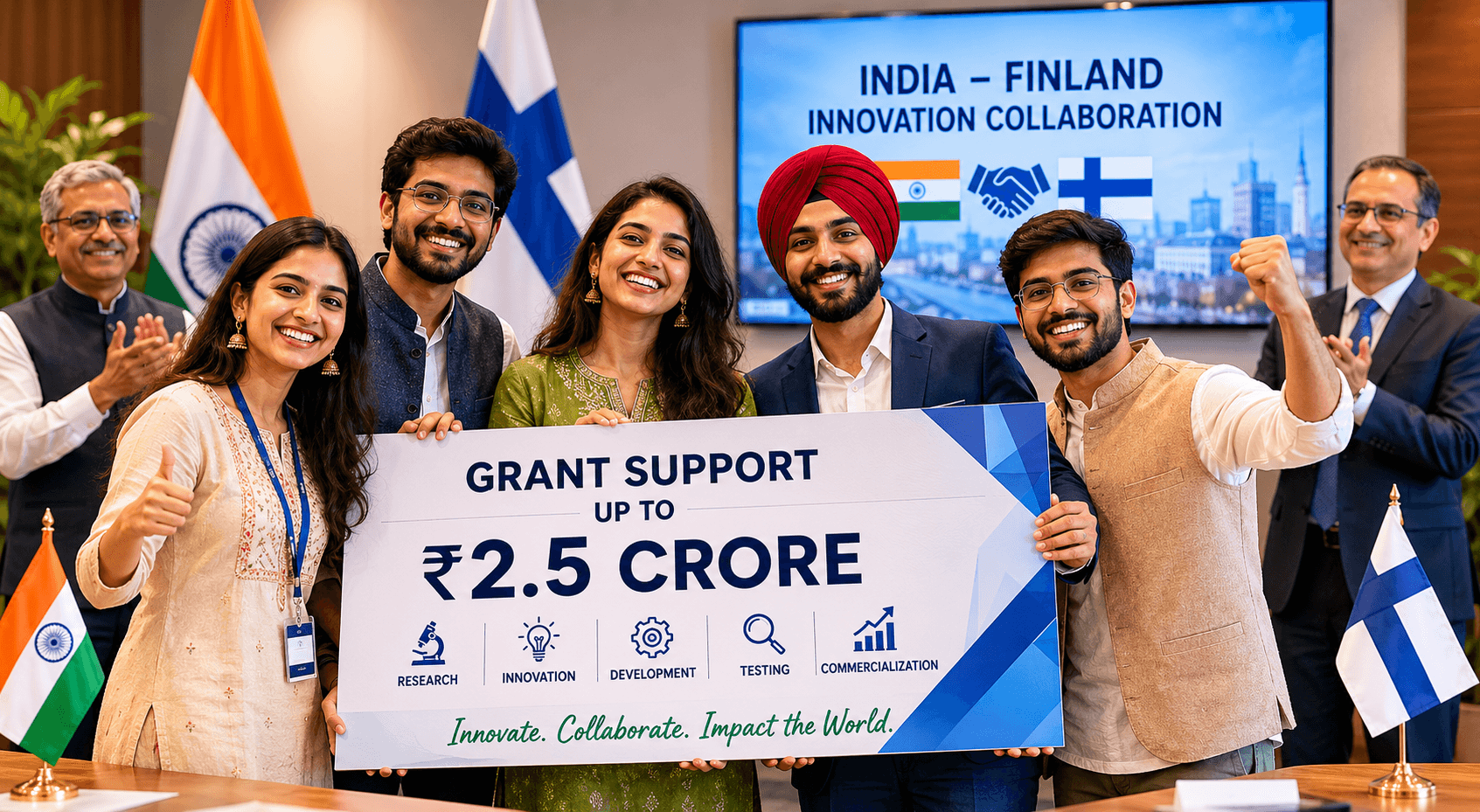
India has a growing number of grants, startup schemes and incubator-backed programs.
For example, the Startup India Seed Fund Scheme supports eligible startups with funding for activities such as proof of concept, prototype development, product trials, market entry and commercialization.
The important part?
Some funding doesn't require you to sell equity.
That's worth paying attention to.
Don't Send Your Deck to 1,000 Investors
Send it to 50 relevant ones.
There's a massive difference.
Imagine you're building a deeptech company.
You could spend three weeks emailing random VCs.
Or you could identify investors who:
Invest at your stage
Invest in deeptech
Write checks in your range
Have relevant portfolio companies
Understand your market
The second list is smaller.
It's also much more useful.
Fundraising is not a volume game. It's a matching game.
Your Pitch Deck Should Answer 6 Questions
Forget the 30-slide masterpiece.
A good investor should understand your company quickly.
Your deck needs to answer:
1. What problem are you solving?
2. Why is this problem important?
3. What have you built?
4. Why will people use it?
5. Why can this become a massive company?
6. Why are you the team to build it?
Everything else supports these questions.
If your deck doesn't make these obvious, adding another 15 slides probably won't help.
The Most Underrated Fundraising Hack: Start Before You Raise
Don't wait until you're fundraising to meet investors.
Talk to them earlier.
Not necessarily to ask for money.
Ask for feedback.
Show them what you're building.
Ask what they think.
Keep them updated as you grow.
Why?
Because a cold email saying:
"Hi, we're raising ₹5 crore. Here's our deck."
is very different from:
"We've been building this for 8 months. You saw our product last year. We've now grown from 500 to 20,000 users."
The second conversation starts with context.
Relationships compound.
And Please Don't Obsess Over Valuation
Founders sometimes spend weeks trying to maximize valuation by another 10–20%.
That's understandable.
But raising money at a slightly higher valuation isn't necessarily a win if the investor is a poor fit, the round takes six months, or the terms are bad.
Think about the entire deal:
Valuation
Dilution
Investor quality
Board rights
Control
Liquidation preferences
Future fundraising implications
The highest valuation isn't always the best deal.
What If Nobody Wants to Fund You?
This is where things get interesting.
Don't immediately conclude:
"Investors don't understand my vision."
Maybe they don't.
But maybe they're right.
Ask yourself:
What information would make an investor change their mind?
More users?
Revenue?
Retention?
A working prototype?
A major customer?
Regulatory approval?
A better founding team?
Then go get that evidence.
Sometimes the best fundraising strategy is:
Stop fundraising. Start building.
Come back with better numbers.
A Better Way to Find Funding Opportunities
Here's another problem founders face.
Funding opportunities are everywhere.
But they're scattered everywhere too.
One VC posts on LinkedIn.
An accelerator opens applications on its website.
A government grant appears on another portal.
An incubator announces a program on X.
A startup competition gets posted somewhere else.
And suddenly the founder is spending more time searching for funding than building the company.
That's one of the reasons we built Fundizr.
Fundizr helps founders discover funding opportunities, investors, grants, accelerators and other startup opportunities without having to constantly hunt across the internet.
Because founders shouldn't need a full-time researcher just to figure out who is funding startups right now.
The Fundraising Playbook
If I were raising for a startup today, I'd keep it simple.
Week 1
Get the story right.
Problem → Solution → Traction → Market → Why you.
Week 2
Build a list of 50–100 highly relevant investors and programs.
Not random investors.
Relevant investors.
Week 3
Start warm introductions wherever possible.
Talk to founders in their portfolio.
Reach out directly where necessary.
Week 4+
Run fundraising like a process.
Track:
Who you've contacted
Who replied
Meetings
Follow-ups
Interest
Next steps
Terms
And keep building the company while you're doing it.
Because here's the thing founders often forget:
Your startup is the product. Fundraising is not.
One Last Thing
You don't need investors to validate your startup.
You need customers.
Investors are useful because they can give you capital, connections, hiring help, strategic support and credibility.
But don't build a company whose primary customer is a VC.
Build something people desperately want.
Get traction.
Make the numbers work.
Then go find the right capital to accelerate it.
The best fundraising pitch is still a great company.
And if you're looking for the next grant, accelerator, investor or funding opportunity, that's exactly the problem Fundizr is trying to solve.
Build the company. We'll help you find the opportunities.